 Continue with Facebook
 Continue with Google
 Continue with Apple
Liszt Devoted: Harmonies Poétiques, Pt 1
Details
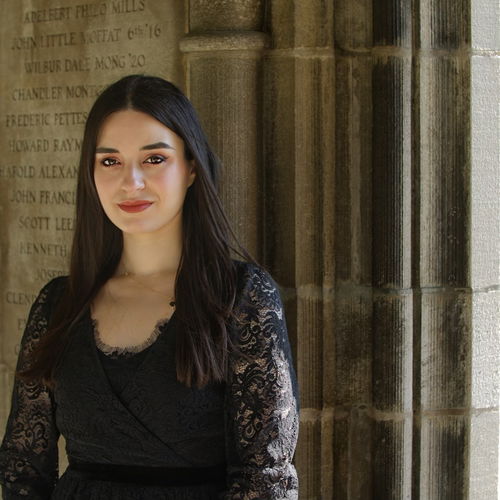
Theodora Serbanescu-Martin full profile / solo piano / 1 musician
Full program notes
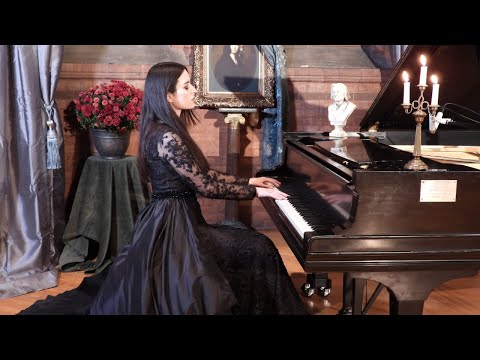
I'll be playing the first half of Liszt's extensive Harmonies poétiques et religieuses, S. 173 (written/reworked in 1847, published 1853, or pieces 1-5):
- Invocation
- Ave Maria
- Bénédiction de Dieu dans la solitude ('The Blessing of God in Solitude'); 4. Pensée des morts ('In Memory of the Dead')
- Pater Noster A
I will end with one extra piece from Liszt's Buch der Lieder for solo piano (II): "Oh! Quand Je Dors," S. 531.
Stay tuned for Harmonies poétiques, Part II later this spring.
Historical context
Composed and repeatedly reworked across the 1830s and 1840s, Liszt's Harmonies poétiques et religieuses -- one of the most significant sets for solo piano (and 1.5 hours in length) -- stands at the spiritual and poetic center of his output. The title is borrowed directly from a collection of poems by Alphonse de Lamartine, whose writing -- lyrical, metaphysical, and politically liberal -- deeply shaped Liszt’s imagination. Like Lamartine’s verse, this music meditates on solitude, prayer, mourning, and transcendence, offering an expression of inward spirituality rather than dogma.
Liszt worked on these pieces over many years, revising earlier versions into the unified cycle published in 1853. Several movements reflect moments of retreat and contemplation during his time in the Polish countryside at Woronińce, while others respond to personal loss and to Romanticism’s deep preoccupation with death, memory, and the sacred. The result is music that inhabits a space between devotion and doubt -- rooted in Catholic ritual yet infused with metaphysical questioning and humanitarian idealism.
At the heart of this cycle is not only religious devotion, but devotion as such: an affective orientation toward something absent, distant, or only partially knowable. Prayer here functions as love and longing rather than doctrine; repetition becomes a form of waiting, and sound itself becomes a vehicle for reaching toward what cannot be possessed. Liszt’s sacred language is inseparable from his language of love -- whether remembered, yearning, deferred, or endlessly renewed through musical sound.
This concert is offered in that spirit. It is dedicated to love in its many Romantic guises: love of the divine, love of the dead, love of the distant beloved, love as fidelity sustained across absence and time. In Bénédiction de Dieu dans la solitude, stillness becomes an ethical and emotional stance; in Pensée des morts, remembrance takes the place of presence; in Pater Noster, collective prayer becomes intimate address. These works ask for tender attention, patience, and vulnerability.
The program concludes with “Oh! Quand je dors”, Liszt’s piano transcription of an original song about nocturnal visitation and dreamlike reunion with a beloved who exists elsewhere -- perhaps unreachable except in imagination.
Together, these pieces present Liszt far beyond his reputation as a virtuoso showman: as a poetic thinker at the keyboard, using sound to explore belief, longing, solitude, and the sustaining power of love itself.
The second half of Harmonies poétiques et religieuses will follow later this spring.
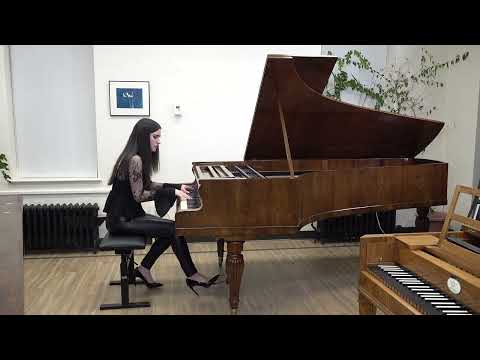
Videos from this player

Audio from this player
Brahms Klavierstücke Op. 116: I. Capriccio in D minor
Brahms Klavierstücke Op. 116: II. Intermezzo in A minor
Brahms Klavierstücke Op. 116: III. Capriccio in G minor
Brahms Klavierstücke Op. 116: IV. Intermezzo in E Major
Brahms Klavierstücke Op. 116: V. Intermezzo in E minor
Brahms Klavierstücke Op. 116: VI. Intermezzo in E Major
Brahms Klavierstücke Op. 116: VII. Capriccio in D minor
Other programs from this ensemble

Brahms & the Art of Difficulty
- Musician profile: Theodora Serbanescu-Martin
-
 Instruments:
piano
Instruments:
piano
-
Exploring Baroque & Romantic Fantasias
- Musician profile: Theodora Serbanescu-Martin
-
Instruments:
Piano
-
- Musician profile: Theodora Serbanescu-Martin
-
Instruments:
2 pianos
- Musicians: Theodora Serbanescu-Martin, Miles Graber
-
- Musician profile: Theodora Serbanescu-Martin
-
Instruments:
Solo piano
-
Death, Dead Hands, & Difficulty @ Piano
- Musician profile: Theodora Serbanescu-Martin
-
Instruments:
solo piano
-
- Musician profile: Theodora Serbanescu-Martin
-
Instruments:
Piano