 Continue with Facebook
 Continue with Google
 Continue with Apple
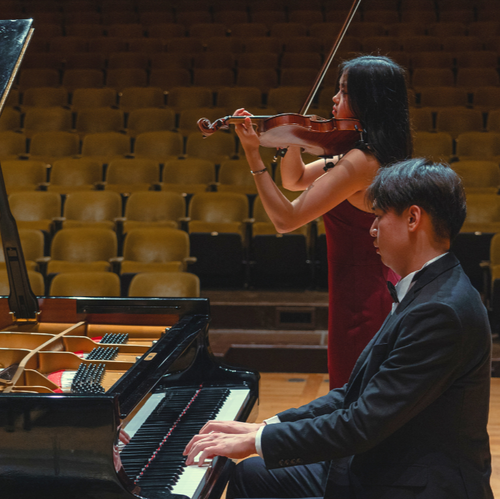
Violin and Piano Recital
Details
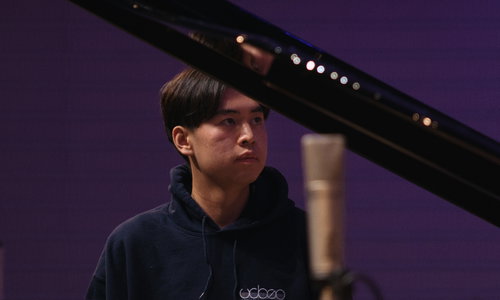
Vanness Yu & Phoebe Wu full profile / Violin and Piano / 2 musicians
Other players: Phoebe Wu
Full program notes
Amy Beach Op. 23 - Romance for Violin and Piano (1893):
In all of the violin/piano repertoire, no piece encapsulates the unfiltered rawness of love quite as much as Amy Beach’s Romance. The push and pull effect can be heard with the passing back and forth of the main theme, and the emotional turbulence is heightened by Beach’s post-romanticism harmonic language. She is part of what we call the “Second New England School” of composition, and was a pioneer for the American voice in classical music.
Jeno Hubay Op. 3 No. 3 - Carmen Fantaisie brilliante (1876):
To look for a better description of this operatic transcription, look no further than the title: "Fantasie brilliante" perfectly defines this fiery, flirtatious work. Carmen, always dazzling and seductive, is transfigured into the jewel of violin repertoire by the Hungarian Jeno Hubay. Themes include the infamous Habañera and the Toreador theme. Carmen is unyielding and fears nothing, except the technical extremities required to capture the piece.
Antonin Dvorak Op. 11 - Romance in F minor (1879):
A distant cousin to the Romance of Amy Beach, Dvorak’s wintry Romance brings listeners to a darker place. The composer finds inspiration from within: taking a second movement of a previous string quartet of his own and reshaping it. A snowy forest of sound: portly pizzicatos are raindrop-esque, the melodies always yearning for warmth. Surging runs in the development section erupt explosively, until the snowstorm simmers back down to a gentle, pleasant, powdery fall. The piece ends in a peaceful major key, a gesture of resolution.
Olivier Messiaen - Theme et variations (1932):
A work composed for his first wife Claire Delbos, a violinist whom he would premiere and perform with publicly many times. Messiaen’s music is heavily inspired by his chromesthesia, a condition in which sound would trigger the bearer to perceive certain colors. Combined with his devout Catholicism and love for nature and the tunes of birdsongs, five variations on a galactical and timeless theme were born.
Pyotr Ilyich Tchaikovsky - Souvenir d’un lieu cher Op. 42 No. 3 - Melodie in E-flat Major (1878):
Tchaikovsky finished the Souvenir d’un lieu cher for piano and violin during a two-week vacation in Brailivo, Ukraine. Translated into English, the title states: Memory of a dear place. The final dedication was to Brailivo itself, so it is safe to say that he was inspired and wholly charmed by his visit. Melodie is the last of these short sweets, concluding the suite quite pleasantly.
Manuel Ponce - Estrellita arr. Heifetz (1912):
While on tour, violinist Jascha Heifetz sat at a coffee shop in Mexico when he heard a singer perform the Manuel Ponce arrangement of the folk tune “Estrellita” for voice and piano. Ponce wrote many folk-tune transcriptions, Estrellita (translated into My Little Star) being one of the most famous. The singer serenades the little stars in the night sky, asking for their love. Heifetz’s transcription shifts the piece into a different key, heightening the yearning desire. The harmonic language is stylish and chic, providing a groundedness for large interval leaps that search for answers. glancing up at the stars for assurance.
Historical context
Our music is deeply rooted in the traditions of Western Classical Art Music, just as our instruments are. However, what makes music special, is that the music itself might have an origin, but the musician themselves have so many life experienced that have been shaped by worldwide influences, especially in this age of the internet. Our interpretations, performance, notes and spoken words about this piece have all been shaped by our own history, as we intermingle the histories of the music and the musician.
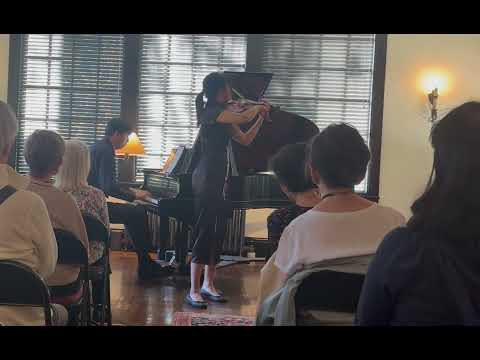
Videos from this ensemble

Other programs from this ensemble
- Musician profile: Vanness Yu & Phoebe Wu
-
 Instruments:
Violin and Piano
Instruments:
Violin and Piano
- Musicians: Vanness Yu, Phoebe Wu
-
- Musician profile: Vanness Yu & Phoebe Wu
-
Instruments:
Violin and Piano
- Musicians: Vanness Yu, Phoebe Wu
-
Full Length Violin and Piano Program
- Musician profile: Vanness Yu & Phoebe Wu
-
Instruments:
Violin and Piano
- Musicians: Vanness Yu, Vanness Yu and Phoebe Wu