

- Bring your own drinks
- Alcoholic and non-alcoholic drinks provided
-
Wheelchair access
- Not wheelchair accessible
-

- Kid-friendly event

This is a groupmuse
A live concert in a living room, backyard, or another intimate space. They're casual and friendly, hosted by community members.
Hosts
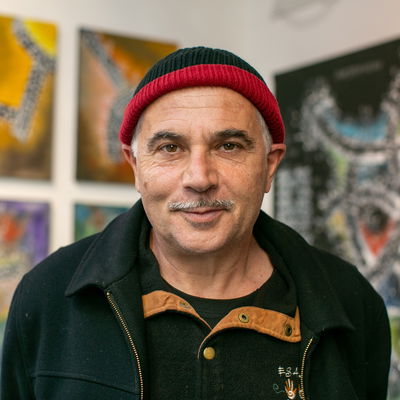

The rivetting Theodora Serbanescu Martin joins forces with Miles Graber for this extraordinary event for two pianos. Music by Mozart, Brahms and Liszt. Held at the iconic Piano Palace in Half Moon Bay. An experience not to be missed!
What's the music?

Visionary Fantasies: Mozart, Liszt, and Brahms for Two Pianos
Mozart-Busoni, Fantasia in F Minor, K. 608 (originally for mechanical organ)
Liszt, Fantasy and Fugue on the chorale "Ad nos, ad salutarem undam," S. 259 (originally for organ)
~short intermission~
Brahms, Sonata for Two Pianos, op. 34b in F minor (op. 34 is the first version, originally for piano quintet)
Where does this music come from?
All of the works on today’s program originated in versions for other instruments or ensembles and revolve around fantasy, transcription, and contrapuntal excess. Moving between Gothic drama, Baroque revival, Romantic virtuosity, and architectural counterpoint, the program explores how nineteenth-century composers transformed inherited forms into vehicles for overwhelming sonic and imaginative experience.
Mozart’s Fantasy and Fugue in F Minor, K. 608, was originally composed in 1791 for a mechanical organ commissioned for a fashionable Viennese automaton exhibition at the height of late eighteenth-century fascination with mechanical marvels and artificial life. The era produced inventions and spectacles such as Wolfgang von Kempelen’s infamous “Mechanical Turk,” elaborate musical automata such as Marie Antoinette playing the keyboard, and Vaucanson’s celebrated “Digesting Duck.” Although Mozart reportedly disliked writing for mechanical instruments, the resulting composition became one of his most extraordinary and curious late works. In this piece, the dark key of F minor — frequently associated in the late eighteenth century with tragedy, pathos, and the supernatural — combines with sharply chromatic counterpoint and angular fugal writing to create a work deeply aligned with emerging late-eighteenth-cetury Gothic aesthetics. The version performed tonight is Ferruccio Busoni’s arrangement for two pianos, which both amplifies the orchestral density of the music and clarifies its contrapuntal textures through spatial separation across two instruments.
Liszt’s monumental Fantasy and Fugue on “Ad nos, ad salutarem undam” similarly transforms a borrowed theme into a vast musical architecture. Written between 1850 and 1852 on the chorale from Giacomo Meyerbeer’s opera "Le Prophète," the work develops its central motif through an astonishing range of transformations, culminating in a massive fugue whose scale recalls the last movement of Beethoven’s Hammerklavier Sonata. Across its nearly half-hour span, the music traverses improvisatory fantasia, fiery Lisztian fanfare, contemplative chorale, and relentless contrapuntal perpetuum mobile writing. Originally conceived for organ, the piece remains one of the monuments of the organ repertory. Liszt's original published score simultaneously included a version for piano four hands written on the top and bottom staves, performed tonight across two separate instruments in order to accommodate the enormous breadth and density of the writing. Much of the original organ texture is concentrated in the first piano part, while the second redistributes and slightly expands the organ's pedal part. The work could also be performed on pedal piano — a now-rare nineteenth-century instrument equipped with an organ-like pedalboard — and was later arranged for solo piano by Busoni.
Brahms’s Sonata for Two Pianos in F Minor, Op. 34b, occupies a fascinating position within the evolution of one of his greatest chamber works. The sonata represents an intermediate version of what ultimately became the Piano Quintet in F Minor, Op. 34: the music began as a string quintet before Brahms radically reconceived it for two pianos and finally transformed it into the celebrated quintet known today. The result is Brahms at his most architecturally expansive, emotionally turbulent, and pianistically uncompromising. Both the third and fourth movements incorporate fugal procedures, while the finale opens with an austere, near-atonal canon whose strangeness recalls Mozart’s “Dissonance” Quartet as well as pre-Baroque counterpoint (one of Brahms's strongest historicist investments). The immense virtuosity of the original quintet’s piano writing is redistributed between two equally demanding and autonomous pianists, producing music of symphonic scale and intensity. The sonata also emerges from Brahms’s period of greatest investment in transcendental piano virtuosity, composed only shortly before the Paganini Variations, Op. 35, which are among the most formidable works in the piano repertoire. Around this time, Brahms jokingly told the virtuoso (and Lisztian!) Carl Tausig that he was eager to write some “anti-Liszts,” reflecting both his competitive relationship to Liszt as a man and musical institution and his desire to reshape the tradition according to his own aesthetic ideals.
In tonight’s program, however, the music — and hopefully spirits! — of Brahms and Liszt do not appear as rivals, but as parallel explorers of Romantic fantasy, virtuosity, and contrapuntal imagination. For both composers, fugue and fantasy became deeply charged artistic symbols tied not only to music, but also to visual art (especially painting), architecture, (self-)mythology, virtuosity, and the severe mid-nineteenth-century "battle" over what good composition meant. These themes will be explored further in Theodora’s pre-concert talk before the performance.
Location
Exact address sent to approved attendees via email.
This is a groupmuse
A live concert in a living room, backyard, or another intimate space. They're casual and friendly, hosted by community members.
Hosts
Attendees



 Continue with Facebook
 Continue with Google
 Continue with Apple
Comments (3)
Comment sections are only for participants.